
Sensor Magnet Coatings: Ni-Cu-Ni, Epoxy, and Parylene Compared for Harsh Environments
An engineering and procurement guide comparing the three most common coatings for NdFeB sensor magnets. Covers salt spray resistance, thickness tolerances, failure modes, and cost.
Decision brief
Who this is for
Application engineers, hardware designers, and procurement teams selecting NdFeB magnets for harsh environment sensors.
What you can decide
- Which coating provides the best protection against humidity, automotive fluids, or salt spray.
- How coating thickness impacts the magnetic air gap and assembly tolerance.
- When the high cost of Parylene is justified over standard Epoxy or Ni-Cu-Ni.
Evidence included
- Coating property comparison table (thickness, salt spray, temp, cost).
- Supplier RFQ checklist for specifying coating requirements.
- Environmental test failure modes.
Practical boundaries
- Coating performance depends on the underlying plating process and substrate preparation.
- Salt spray hours are standardized tests and do not perfectly simulate real-world cyclic conditions.
When specifying a permanent magnet for a Hall effect, magnetoresistive (AMR/GMR/TMR), or reed switch sensor, the primary focus is typically on the magnetic material grade (e.g., N42, N52SH) and the physical dimensions. However, for sensor applications operating outside of climate-controlled environments, the magnet coating is often the single most critical factor in preventing premature field failure.
Sintered Neodymium-Iron-Boron (NdFeB) is the most widely used material for high-performance sensor magnets due to its exceptional energy product (BHmax). Unfortunately, NdFeB is highly susceptible to corrosion. The iron content oxidizes rapidly in the presence of moisture, and the neodymium-rich phase at the grain boundaries is prone to intergranular corrosion. Without a proper coating, an NdFeB magnet will eventually rust, swell, and literally turn to magnetic powder—a process known as hydrogen decrepitation. In a tightly toleranced sensor assembly, a swelling magnet can jam mechanical components, shatter sensor housings, and result in a complete loss of magnetic flux.
This guide provides a deep engineering and procurement comparison of the three most common coatings used in the sensor magnet industry: Ni-Cu-Ni (Nickel-Copper-Nickel), Epoxy, and Parylene. Use it with your sensor magnet material selection, tolerance stack-up review, and coating corrosion control plan so the coating choice matches the magnet grade, air gap, housing, and inspection method. By understanding the dimensional, environmental, and cost trade-offs of each, teams can avoid costly over-engineering or catastrophic under-specification.
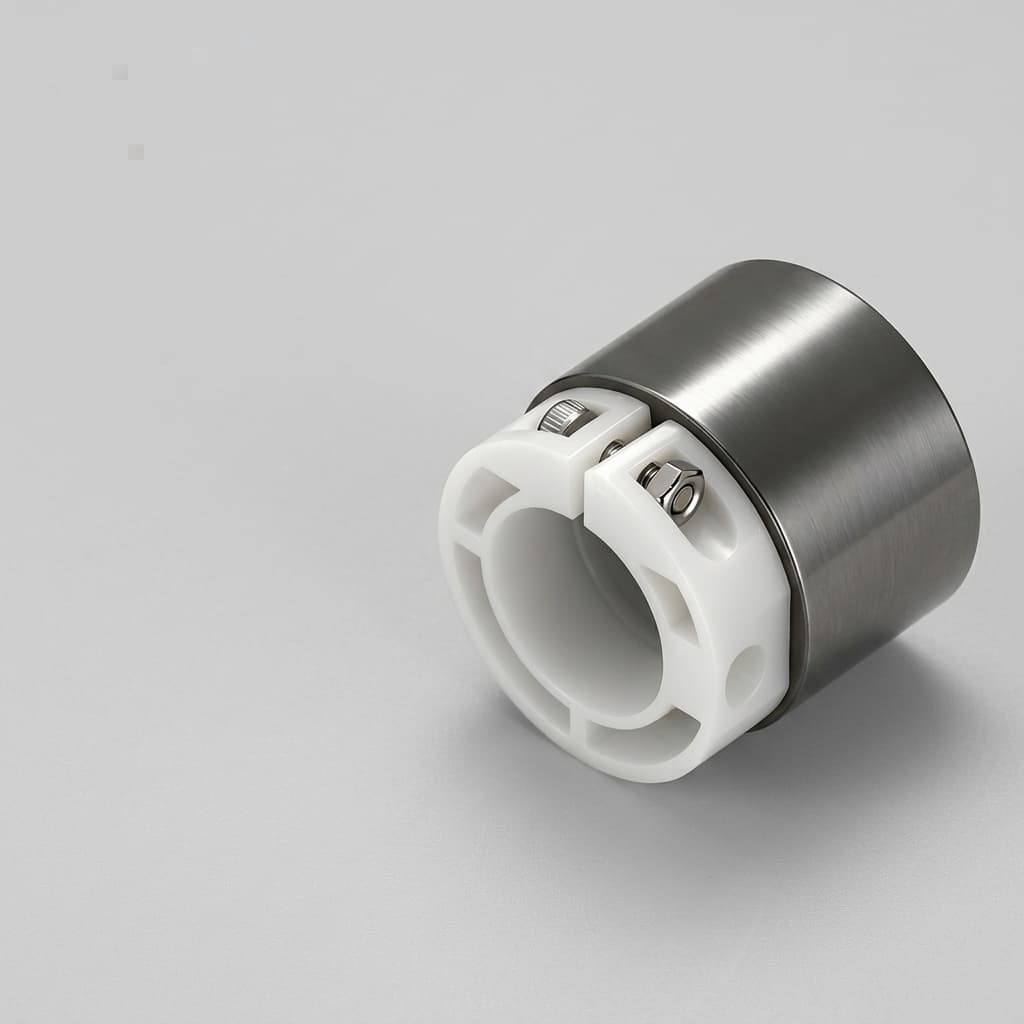 A precision Hall effect sensor magnet requiring exact coating tolerances to maintain a consistent air gap.
1. Ni-Cu-Ni (Nickel-Copper-Nickel): The Industry Standard
The triple-layer Nickel-Copper-Nickel electroplating is the default, standard coating for the vast majority of commercial NdFeB magnets. When a supplier quotes a neodymium magnet without specifying a coating, it is almost certainly Ni-Cu-Ni.
How It Works
The coating is applied via electrolytic plating. It consists of three distinct layers:
- Base Nickel Layer: Provides strong adhesion to the bare NdFeB substrate.
- Middle Copper Layer: Copper is highly ductile. It acts as a buffer layer to absorb mechanical stress and prevent the brittle nickel layers from cracking. It also provides excellent electrical conductivity for the final plating stage.
- Top Nickel Layer: Provides the final bright, shiny metallic finish and primary resistance to atmospheric moisture.
Engineering Trade-offs
- Thickness: Typically ranges from 10 μm to 25 μm total. The plating process allows for relatively tight tolerances, which is excellent for sensor magnets where dimensions must be strictly controlled to maintain a precise magnetic air gap.
- Corrosion Resistance: Good for indoor, climate-controlled environments. In standard Salt Spray Tests (SST), Ni-Cu-Ni generally survives 48 to 72 hours before red rust appears. It is not suitable for direct exposure to marine environments or severe automotive under-hood conditions without secondary sealing.
- Mechanical Properties: The metallic surface is hard and durable, making it suitable for automated pick-and-place assembly. However, it can chip if subjected to sharp impacts.
- Electrical Conductivity: Ni-Cu-Ni is electrically conductive. In high-frequency sensor applications, this can theoretically allow eddy currents to form on the magnet's surface, though this is rarely an issue for static or low-speed position sensors.
Best For: Consumer electronics, indoor industrial automation, heavily encapsulated sensor housings where the magnet is potted, and cost-sensitive applications.
2. Epoxy Coating: The Harsh Environment Workhorse
When sensor magnets are exposed to high humidity, automotive fluids, industrial chemicals, or salt spray, black Epoxy is the most common upgrade from Ni-Cu-Ni.
How It Works
Epoxy coatings are typically applied via spray coating or e-coating (electrophoretic deposition), followed by a thermal curing process. The resulting finish is matte black and provides a thick, non-porous polymer barrier over the magnet.
Engineering Trade-offs
- Thickness: Epoxy is thicker than Ni-Cu-Ni, generally ranging from 15 μm to 30 μm. Because it is thicker and applied differently, the dimensional tolerance is slightly wider. Engineers must account for this extra thickness when designing the physical air gap between the magnet and the sensor IC.
- Corrosion Resistance: Exceptional. A high-quality epoxy coating can easily surpass 500 hours in a Salt Spray Test (SST), and sometimes up to 1,000 hours. It provides excellent resistance to water, mild acids, and industrial solvents.
- Mechanical Properties: This is the Achilles' heel of epoxy. It is a rigid polymer and is brittle. If an epoxy-coated magnet is press-fit into a tight metal housing, the interference fit can scrape or chip the epoxy. Even a microscopic chip exposes the NdFeB substrate, acting as a focal point for rapid, localized corrosion that undermines the rest of the coating.
- Adhesive Compatibility: Epoxy bonds exceptionally well to industrial adhesives (like cyanoacrylates or structural epoxies), often better than the slick surface of Ni-Cu-Ni.
Best For: Automotive chassis sensors, agricultural equipment, marine applications, and any environment where the magnet is exposed to severe moisture but is adhesively bonded (rather than press-fit) into place.
3. Parylene: The Premium Aerospace & Medical Standard
Parylene is the ultimate conformal coating for permanent magnets. It is widely used in implantable medical devices, aerospace sensors, and ultra-high-reliability industrial applications.
How It Works
Unlike plating or spraying, Parylene is applied via Chemical Vapor Deposition (CVD) at room temperature in a vacuum chamber. The solid Parylene dimer is vaporized, pyrolyzed into a monomer, and then introduced into the chamber where it deposits molecule-by-molecule onto the magnets.
Engineering Trade-offs
- Thickness: Extremely thin and perfectly uniform. Typical thickness is between 10 μm and 15 μm. Because it deposits as a gas, there is zero pooling, no edge buildup, and perfectly even coverage even inside blind holes or complex multipole geometries.
- Corrosion Resistance: Outstanding. Parylene is completely pinhole-free, chemically inert, and provides a superior moisture barrier. It resists virtually all organic solvents, acids, and bases.
- Mechanical Properties: It is tough but thin. It reduces the friction of the magnet surface, which can sometimes make adhesive bonding challenging without proper surface primers.
- Temperature Limits: Standard Parylene C has a continuous operating temperature limit of around 80°C in air (higher in a vacuum). If your sensor requires high-temperature NdFeB grades (e.g., 150°C), the Parylene coating will degrade before the magnet demagnetizes.
- Cost: Very high. The CVD process is batch-limited and time-consuming. Parylene coating can often double the cost of a small sensor magnet.
Best For: Medical sensors, aerospace systems, fluid-immersed sensors, and micro-magnets where coating thickness must be absolute minimum to preserve the magnetic field strength at a given distance.
Structured Comparison: Coating Performance Matrix
| Feature / Property | Ni-Cu-Ni (Standard) | Black Epoxy | Parylene C (CVD) | Uncoated (Passivated) | Zinc (Alternative) | Gold (Premium) |
|---|---|---|---|---|---|---|
| Typical Thickness | 10 – 25 μm | 15 – 30 μm | 10 – 15 μm | N/A | 8 – 15 μm | 10 – 20 μm |
| Salt Spray Test (SST) | 48 – 72 hours | 500 – 1000 hours | > 500 hours | < 2 hours | 24 – 48 hours | > 200 hours |
| Application Process | Electroplating | Spray / E-Coating | Chemical Vapor Dep | None | Electroplating | Electroplating |
| Electrical Resistance | Conductive | Insulator | Insulator | Conductive | Conductive | Conductive |
| Mechanical Durability | Good (can scratch) | Fair (brittle, chips easily) | Excellent (tough, thin) | Poor | Fair | Soft |
| Relative Cost | $ (Baseline) | $$ (Low-Mid) | $$$$$ (High) | Free | $ (Baseline) | $$$$ (High) |
Note: Performance parameters depend heavily on the manufacturer's quality control, pre-treatment processes, and the physical geometry of the magnet.
Assembly and Dimensional Considerations
Procurement teams often buy magnets based strictly on a drawing's dimensions, but engineers must remember that coatings occupy physical space and alter tolerances.
1. The Magnetic Air Gap
In Hall effect or AMR/GMR sensor design, the distance between the magnet surface and the sensor IC is the "air gap." Magnetic flux density decays exponentially with distance. If you design a system assuming a 1.0 mm air gap, but switch from a 10 μm Parylene coating to a 30 μm Epoxy coating, your physical air gap is reduced, but your magnetic air gap effectively increases because the coating itself is non-magnetic. For very small micro-magnets, a thick coating noticeably reduces the surface Gauss reading.
2. Tolerance Stack-up
Magnets are generally toleranced at ±0.05 mm or ±0.1 mm. Coatings add to this. When calculating the tolerance stack-up for inserting a magnet into a machined slot, you must account for the maximum material condition (MMC) of the magnet plus the maximum thickness of the coating.
3. Press-Fit vs. Adhesive Bonding
As mentioned, Epoxy coatings hate press-fits. If you must press-fit an NdFeB magnet into a rotor for a magnetic encoder, Ni-Cu-Ni or Zinc are better choices because the metallic plating deforms slightly rather than shattering. If you must use Epoxy for corrosion resistance, use a slip-fit design and secure the magnet with an industrial adhesive or potting compound.
Engineering Pro Tip: Overmolding NdFeB
If you plan to overmold the magnet with plastic (injection molding) to seal it, ensure the injection temperature does not exceed the Curie temperature of the magnet grade, and be aware that the injection pressure can strip standard coatings if gate placement is directly over the magnet.
Procurement RFQ Checklist for Sensor Magnet Coatings
When sourcing sensor magnets, vague specifications lead to inconsistent batches. Ensure your RFQ (Request for Quote) includes the following coating-specific details:
- Coating Type & Layers: Do not just say "Nickel." Specify "Ni-Cu-Ni electroplating."
- Thickness Requirement: Specify the acceptable thickness range (e.g., "Epoxy Coating, 15-25 μm").
- SST Requirement: State the required Salt Spray Test survival hours (e.g., "Must pass 96 hours SST with no visible red rust per ASTM B117").
- Plating Method (Barrel vs. Rack): For very small sensor magnets, barrel plating is standard but can cause tumbling damage (chipped edges). For critical magnets, specify rack plating (though it costs more).
- Pre-treatment: Ask the supplier to confirm their acid wash and ultrasonic cleaning processes prior to coating, as poor prep leads to peeling epoxy.
- AQL (Acceptable Quality Limit): Specify the AQL for visual coating defects like pinholes, blistering, or "orange peel" textures.
Frequently Asked Questions (FAQ)
Can I mix coatings, like Epoxy over Ni-Cu-Ni?
Yes, this is known as a double coating (Ni-Cu-Ni + Epoxy) and it provides the ultimate protection short of hermetic sealing. The Ni-Cu-Ni provides a durable base and seals the grain boundaries, while the Epoxy provides a chemical and moisture barrier. However, this significantly increases the total coating thickness (up to 40+ μm) and cost.
Are there color-coding options for sensor magnets?
Yes. If you need to distinguish the North from the South pole visually during assembly, Epoxy coatings can be applied in different colors (e.g., black with a red dot, or entirely different colored epoxies). Some suppliers also offer colored Teflon (PTFE) coatings for this purpose.
What happens if the coating fails?
Once moisture penetrates the coating, hydrogen decrepitation begins. The NdFeB material oxidizes, turning into a powdery rust. Because the oxidized material has a larger volume than the solid metal, the magnet swells. This will burst potting compounds, jam rotating encoder rings, and drastically permanently reduce the magnetic field strength, causing the sensor to fail or output erratic signals.
Why not use SmCo or Ferrite to avoid coating issues entirely?
Samarium Cobalt (SmCo) and Ceramic Ferrite magnets have excellent natural corrosion resistance and generally do not require any coating. If your sensor application allows for lower magnetic strength (in the case of Ferrite) or higher material cost (in the case of SmCo), switching materials is an excellent way to eliminate the coating failure vector entirely.
Sources & References
- ASTM International: ASTM B117 Standard Practice for Operating Salt Spray (Fog) Apparatus - Baseline method behind salt spray corrosion comparisons for coatings. View Resource
- Specialty Coating Systems: A Guide to Parylene Service Temperatures - Technical guidance on Parylene temperature limits and coating selection. View Resource
- Bunting Magnetics Europe: Coatings for Neodymium Magnets - Supplier technical overview of nickel, zinc, epoxy, PTFE, rubber, coating thickness, adhesion, and corrosion-selection factors. View Resource
Need Expert Help with Sensor Magnet Selection?
Specifying the right coating is just one part of designing a reliable magnetic sensor assembly. At MagnetsForSensors, our engineering team helps procurement and hardware teams balance magnetic performance, environmental survivability, and unit cost.
Whether you need ultra-thin Parylene for a medical device or rugged Epoxy for an automotive Hall effect sensor, we can deliver precision magnets tailored to your application.
Contact Our Engineering Team for a Coating Consultation & RFQ →
Reviewed by

Categories
More Posts
ASIL-D Sensor Magnet Requirements: Engineering & Procurement Guide
ASIL-D sensor magnet guide for ISO 26262 programs: compare materials, thermal drift, stray-field immunity, validation evidence, and RFQ controls.

Bonded vs. Sintered NdFeB for Multipole Magnetic Encoders
A comprehensive procurement and engineering guide comparing bonded and sintered NdFeB magnets for rotary encoders, covering magnetic strength, tooling costs, and assembly yield.
Specifying Magnets for Stray-Field Immune Position Sensors (2-Pole vs 4-Pole)
An engineering guide to selecting magnets for ISO 11452-8 compliant stray-field immune position sensors. Learn why upgrading your sensor IC often requires switching from a 2-pole to a 4-pole magnet.