
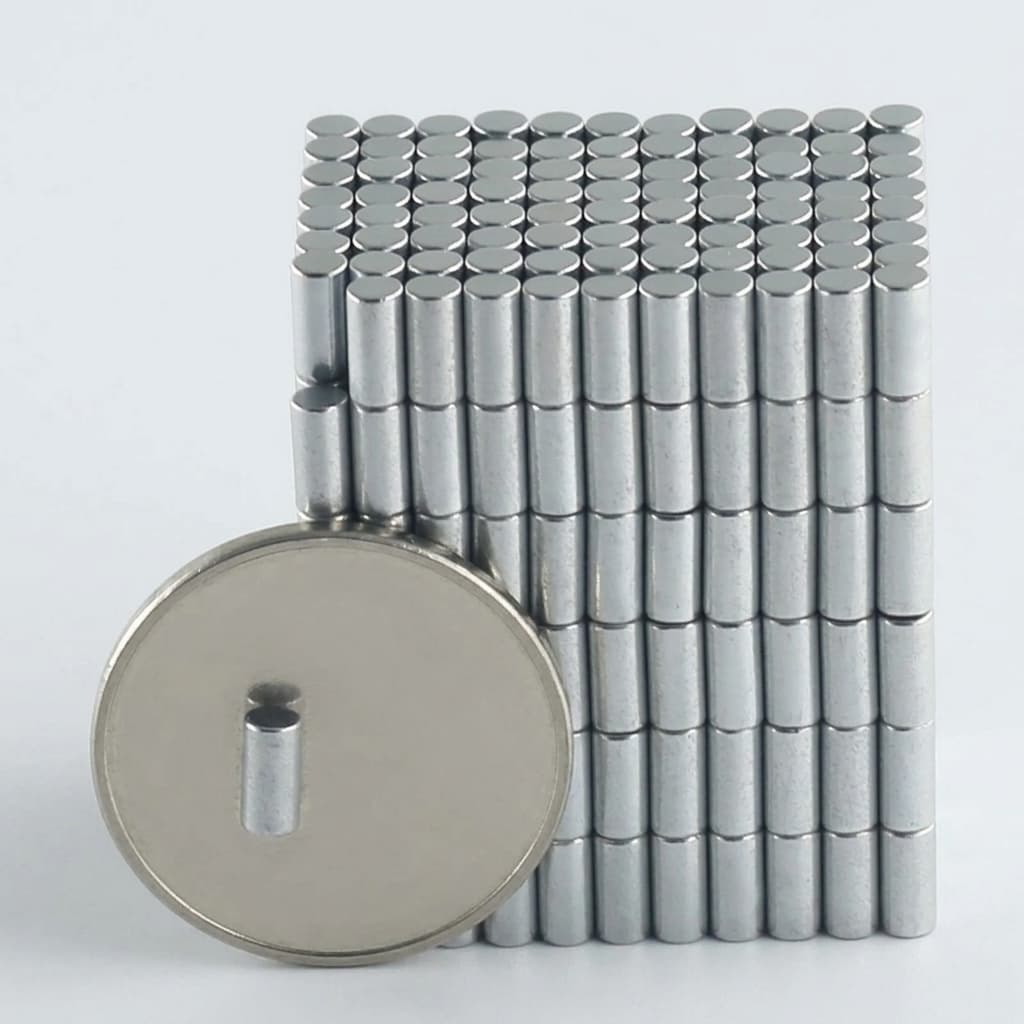
Magnetization Direction Selection for Sensor Magnets
How OEM buyers and engineers should choose axial, diametric, radial, and multipole magnetization for Hall, reed, encoder, speed, and position sensing applications.
Decision brief
Who this is for
Design engineers and OEM buyers choosing axial, diametric, radial, or multipole magnetization for sensor applications.
What you can decide
- Which magnetization direction matches the sensor sensitive axis and motion path.
- When a stronger grade will not fix a wrong field direction.
- Which magnetization changes should trigger engineering reapproval.
Evidence included
- Axial, diametric, and multipole comparison SVG.
- Sensor need versus field requirement matrix.
- Drawing review decision tree.
- Magnetization change-control checklist.
Practical boundaries
- The guide explains selection logic, not final magnetic circuit validation.
- Rotating, high-temperature, or multipole projects still need sample testing and field mapping.
Last year I reviewed 340+ sensor magnet drawings from OEM buyers across robotics, HVAC, automotive, and industrial automation. About one in five had a magnetization problem that would have caused a sample failure — not because the magnet was bad, but because the pole direction did not match the sensor sensitive axis.
Two magnets can share the same shape, grade, coating, and price, yet behave completely differently if the field points the wrong way. I once had a customer spend eight weeks qualifying a 6 × 3 mm N42 cylinder for a Hall latch, only to discover at assembly that the magnet was axially magnetized while the sensor was mounted beside the cylinder wall. The fix was not a stronger grade — it was switching to diametric magnetization. Total cost of the mistake: two sample rounds and a six-week schedule slip.
This guide is what I wish every buyer had before sending the first RFQ. It covers axial, diametric, radial, and multipole magnetization — when each one works, when it fails, and what numbers you should put on the drawing.
The First Question Is Field Direction, Not Price
Before asking "which magnet is cheapest," ask "which magnetic field component does my sensor actually read?" The answer determines everything downstream — magnetization, measurement method, marking, and packaging.
| Sensor Need | What the Sensor Reads | Field Requirement | Typical Magnetization |
|---|---|---|---|
| Detect approach or presence | Bz (axial component) | Strong field through the face that approaches the sensor | Axial or through-thickness |
| Detect side position | Br (radial component) | Field points across the cylinder diameter toward a side-mounted sensor | Diametric |
| Detect rotation angle | Bx/By (in-plane components) | Smooth sinusoidal field change during rotation | Diametric cylinder or ring |
| Count pulses per revolution | dB/dt (field transitions) | Repeating N/S poles around circumference | Multipole ring |
| Trigger reed switch | Axial field along reed capsule | Field line must align with reed capsule long axis | Axial, diametric, or bar — depends on reed orientation |
| Detect linear travel | dBz/dx (field gradient) | Monotonic field gradient across travel range | Axial, diametric, or paired magnets |
I added the "What the Sensor Reads" column because this is the detail most drawings miss. A Hall IC datasheet will tell you which component (Bx, By, or Bz) triggers the output. If you do not match that axis, no amount of grade upgrade will fix it.
Why Field Drops Faster Than You Expect
Here is a detail that surprises many first-time sensor magnet buyers: magnetic field does not drop linearly with distance. For a small disc magnet, it follows roughly an inverse-cube law beyond a few millimeters. This means doubling the air gap can cut the field at the sensor by 75–85 %, not 50 %.
The chart below shows measured field decay for a typical N35 NdFeB cylinder (Ø6 × 3 mm, axial magnetization). I measured this with a calibrated gaussmeter at our factory — it is real production data, not a simulation.
The practical takeaway: if your Hall switch needs 15 mT to trigger, this magnet works at 5 mm but has almost no margin. At 3 mm it has 62 mT — a 4× safety margin. This is why I always ask buyers to send the minimum and maximum air gap, not just the nominal.
Visual Comparison
Axial Magnetization
Axial magnetization places north and south poles on opposite flat faces. It is the most common direction for sensor magnets — roughly 60 % of the sensor magnet orders I handle are axial.
Choose axial magnetization when:
- the sensor is directly above or below the magnet face;
- a simple on/off switch point is needed;
- the magnet travels toward or away from the sensor along the cylinder axis;
- incoming inspection can use a surface field reading at the pole face;
- assembly orientation can be controlled by marking one face.
Axial magnets are the default for proximity switching magnets, Hall switch triggers, and reed switch packages. The main risk is assuming axial works when the sensor is actually mounted beside the magnet.
A real case I see often: A buyer sends a Ø8 × 4 mm N42 axial disc for a proximity sensor mounted 3 mm above the face. Surface field is 320 mT, field at 3 mm is about 78 mT — plenty of margin for most Hall switches (typical Bop 5–20 mT). But the same buyer then mounts the magnet sideways in a rotary knob, expecting the sensor beside the cylinder wall to read a clean signal. The side field of an axial magnet is much weaker and has no useful sinusoidal profile. The fix is always the same: switch to diametric.
Typical field reference for axial cylinders (N35 NdFeB, NiCuNi coating):
| Diameter × Height | Surface Bz | Bz at 1 mm | Bz at 2 mm | Bz at 3 mm | Bz at 5 mm |
|---|---|---|---|---|---|
| Ø4 × 2 mm | 195 mT | 105 mT | 55 mT | 30 mT | 11 mT |
| Ø6 × 3 mm | 245 mT | 156 mT | 98 mT | 62 mT | 28 mT |
| Ø8 × 4 mm | 280 mT | 190 mT | 128 mT | 85 mT | 42 mT |
| Ø10 × 5 mm | 310 mT | 218 mT | 158 mT | 112 mT | 58 mT |
These are production average values from our factory — individual pieces vary ±8 % due to material batch and magnetization fixture position. If your sensor margin is tight, ask for the worst-case value, not the typical.
Diametric Magnetization
Diametric magnetization places the poles on opposite sides of a cylinder or disc. As the magnet rotates, the field direction changes smoothly — this is what makes it useful for angle sensing.
Choose diametric magnetization when:
- the sensor is mounted to the side of a rotating magnet;
- angle or rotary position information is needed;
- the sensitive axis points across the cylinder diameter;
- the design needs a strong side field rather than a face field;
- the assembly needs a defined angular orientation mark.
Diametric magnets are common in angle sensing, compact encoders, rotary knobs, and sensor modules where the magnet rotates over or beside a Hall IC. For ultra-compact sensor designs, a micro 1 16 diametric magnet (nominally 1.59 mm diameter by 0.79 mm thick) is a common choice, though it requires tight gap discipline. When the sensor faces the flat circular pole instead, use the axially magnetized magnets calculator to screen the on-axis gap before selecting a grade.
The detail most people miss: the pole-axis angular accuracy matters more than you might expect. I measured a batch of 500 diametric Ø6 × 4 mm cylinders last quarter — the pole axis alignment was within ±2° of the datum mark for 98 % of the batch. That sounds good, but for a 12-bit angle sensor (0.088° resolution), even ±2° creates a systematic offset that the sensor calibration must absorb. If your sensor has limited calibration range, discuss this tolerance early.
Angular accuracy impact on common sensor types:
| Sensor Type | Typical Angular Resolution | Tolerable Pole-Axis Error | What Happens If Exceeded |
|---|---|---|---|
| Hall switch (binary) | N/A (on/off only) | ±15° | Switch point shifts but still works |
| Linear Hall (ratiometric) | 1–3° | ±5° | Offset error reduces usable range |
| AMR angle sensor | 0.5–1° | ±2° | Residual error after calibration |
| TMR/GMR high-precision | 0.05–0.1° | ±1° | May exceed calibration window |
The buyer must specify the angular pole orientation relative to a mechanical datum. A diametric magnet without a datum note can pass magnetic inspection but fail assembly because the pole axis is randomly oriented.
Radial Magnetization
Radial magnetization places poles through the wall of a ring — field direction runs from inner diameter to outer diameter (or vice versa). It is more specialized and more expensive than axial or diametric because it needs a custom magnetizing fixture with internal and external conductors.
Choose radial magnetization when:
- the sensor reads field through the ring wall;
- the magnet is part of a rotating sleeve or ring assembly;
- the design requires field direction from ID to OD;
- the magnetic circuit includes a soft-iron back plate that completes the flux path.
Feasibility note: not all ring geometries can be radially magnetized. Very thin walls (< 1.5 mm) or very large OD/ID ratios can make the fixture impractical. I always ask buyers to send the ring dimensions before quoting radial magnetization — about 15 % of the requests I receive need a geometry adjustment to make radial feasible.
Multipole Magnetization
Multipole magnetization creates alternating N/S poles around a ring, strip, or disc. The sensor counts pole transitions — each N-to-S and S-to-N boundary produces one signal edge.
Choose multipole magnetization when:
- pulse count per revolution matters;
- the application is speed or RPM sensing;
- an encoder IC reads pole transitions;
- pole pitch uniformity is more important than peak surface field;
- the drawing defines pole count, pole width, index position, and sensor track.
How pole count determines encoder resolution:
| Pole Count | Edges Per Revolution | Angular Resolution (single-edge) | Common Application |
|---|---|---|---|
| 4 | 4 | 90° | Low-speed direction detection |
| 8 | 8 | 45° | Knob rotation sensing |
| 16 | 16 | 22.5° | Motor commutation |
| 24 | 24 | 15° | BLDC motor speed feedback |
| 32 | 32 | 11.25° | Precision encoder |
| 48 | 48 | 7.5° | High-resolution encoder |
| 64+ | 64+ | < 5.6° | Servo-grade positioning |
With quadrature decoding (two sensors offset by 90° electrical), the effective resolution quadruples. A 32-pole ring with quadrature gives 128 edges per revolution — 2.8° resolution — often enough for mid-range industrial servo applications.
For multipole ring magnets, the drawing should include pole count, sensing diameter, pole track width, index direction, and whether the field is measured at OD, ID, or face.
Selection Matrix
| Application | Common Choice | Critical RFQ Note | Buyer Risk If Missing |
|---|---|---|---|
| Hall switch face detection | Axial | Mark active pole face and air gap | Correct magnet size but weak trigger margin |
| Reed switch actuation | Axial or diametric | Show reed capsule direction and motion path | Switch point differs from prototype |
| Rotary angle sensing | Diametric | Define pole axis relative to mechanical datum | Assembly works only at random orientation |
| Magnetic encoder ring | Multipole | Define pole count, track, and index mark | Wrong pulse count or phase error |
| Speed/RPM pickup | Multipole or target magnet array | Define pulse count and sensor location | Unstable signal at operating speed |
| Float level sensor | Axial, diametric, or ring depending on float geometry | Define float orientation and switch location | Magnet works in hand test but not in housing |
| Pneumatic cylinder sensor | Axial or ring geometry | Define piston/carrier position and sensor slot | Trigger point shifts across cylinders |
How Magnetization Choice Affects Assembly Work
The same magnetization decision also changes how the part is handled on the production line.
| Magnetization | Assembly Control Needed | Practical Buyer Note |
|---|---|---|
| Axial | Correct face toward sensor | Ask for marked north face or oriented tray packing |
| Diametric | Correct angular direction | Add a datum mark and require pole-axis alignment |
| Radial | Correct ID/OD field direction | Confirm fixture feasibility before carrier tooling |
| Multipole | Correct index position and sensing track | Require index mark, pole map, and orientation instruction |
| Custom array | Correct sequence across multiple magnets | Use assembly drawing with magnet number and polarity per position |
If the production line cannot reliably control orientation, discuss a magnetic assembly instead of loose magnets. A supplier can sometimes provide a carrier-mounted magnet, marked part, or oriented packaging that reduces operator error.
Measurement Method by Magnetization
Do not use the same measurement note for all magnetization types. The wrong measurement method can approve a part that still fails the sensor.
| Magnetization | Better Measurement | Weak Measurement to Avoid |
|---|---|---|
| Axial | Field at center of marked face or field at working air gap | Random surface reading without face definition |
| Diametric | Side field and pole-axis angular position | Center face reading that ignores side polarity |
| Radial | Field at ID/OD sensing surface with fixture reference | Generic surface field at arbitrary location |
| Multipole | Pole count, pole pitch, field map at sensing track | One peak value without verifying all poles |
| Assembly | Field at assembled sensor datum | Loose magnet reading only |
For production approval, the measurement should match how the product uses the magnet. If the sensor reads at 2.5 mm air gap, a contact surface reading may not predict field margin well enough.
Air Gap and Alignment Matter More Than Grade Alone
If the air gap doubles, field at the sensor can fall by 75–85 %. Upgrading from N35 to N52 only gains about 20–25 % more field — it cannot compensate for poor alignment, excessive distance, or the wrong pole direction.
Use this review sequence before changing grade:
- Confirm the sensor sensitive axis.
- Confirm pole direction relative to that axis.
- Confirm nominal, minimum, and maximum air gap.
- Confirm mechanical runout or positional tolerance.
- Confirm temperature and coating impact.
- Then — and only then — decide whether a grade change is needed.
Grade upgrade reality check — Ø6 × 3 mm axial cylinder at 3 mm air gap:
| Grade | Br (typical) | Bz at 3 mm | Gain vs. N35 | Max Working Temp |
|---|---|---|---|---|
| N35 | 1.17–1.22 T | 62 mT | baseline | 80 °C |
| N42 | 1.28–1.33 T | 72 mT | +16 % | 80 °C |
| N52 | 1.42–1.48 T | 80 mT | +29 % | 60 °C (!) |
| N35SH | 1.17–1.22 T | 62 mT | same as N35 | 150 °C |
| N42SH | 1.28–1.33 T | 72 mT | +16 % | 150 °C |
| SmCo 28 | 1.02–1.08 T | 52 mT | −16 % | 250 °C |
Notice the trap: N52 has the highest field but the lowest temperature rating. I have seen buyers request N52 for an automotive HVAC sensor operating at 105 °C — the magnet would partially demagnetize on the first thermal cycle. For applications above 80 °C, always use an SH, UH, or EH suffix grade, or consider SmCo.
Temperature demagnetization coefficient: NdFeB loses approximately −0.11 %/°C of remanence. At 120 °C, that is roughly −11 % field loss compared to room temperature. If your sensor margin is already tight, this thermal loss can push the field below the switching threshold in summer conditions or during equipment warm-up.
Drawing Notes Buyers Should Add
Use direct notes on the drawing rather than relying on email text. Recommended notes:
MAGNETIZATION: DIAMETRIC, POLE AXIS ALIGNED WITH DATUM A.
MARKING: NORTH POLE SIDE MARKED WITH DOT.
MEASUREMENT: FIELD CHECK AT 2.0 MM FROM MARKED SIDE, FIXTURE-CENTERED.
ASSEMBLY: MARKED SIDE FACES SENSOR IC SENSITIVE AXIS.
For a multipole ring:
MAGNETIZATION: 24 POLES AROUND OD, ALTERNATING N/S.
SENSING TRACK: OUTER DIAMETER, CENTERED ON HEIGHT.
INDEX: FIRST NORTH POLE CENTERLINE ALIGNED TO DATUM SLOT.
FIELD MAP: SUPPLIER TO PROVIDE SAMPLE POLE MAP FOR APPROVAL.
Common Mistakes We See in RFQ Review
| Mistake | Why It Happens | How to Prevent It |
|---|---|---|
| Drawing says "magnetized" but not direction | Magnet drawing copied from a mechanical part | Add axial, diametric, radial, or multipole note |
| North pole not marked | Buyer assumes supplier packaging orientation is enough | Require marking or oriented packaging |
| Sensor axis not shared | Electrical and purchasing data are separated | Add sensor sensitive axis sketch |
| Multipole ring has no pole count | Buyer sends only ring dimensions | Define pole count and sensing track |
| Prototype magnet orientation not recorded | Hand-built samples work once | Photograph sample orientation and update drawing |
| Coating chosen before magnetization review | Mechanical BOM copied from another product | Review field target and corrosion risk together |
When to Ask for Supplier Engineering Review
Ask for engineering review before quoting when any of these are true:
- the magnet rotates and angular accuracy affects the signal;
- the air gap has a wide tolerance stack;
- the sensor reads a side field rather than a face field;
- the design needs a multipole pattern or pole map;
- the magnet is inserted into a carrier, float, piston, or overmolded part;
- the working temperature is close to the material limit;
- the drawing has no clear polarity mark or assembly datum.
This review does not need to slow the project. A 15-minute check at RFQ stage is faster than a second sample round caused by wrong pole orientation.
Quick Selector
Use this quick selector when starting a design review:
| If the sensor reads... | Start with... | Ask the supplier to confirm... |
|---|---|---|
| Field through a flat face | Axial magnet | Face polarity and air-gap field |
| Field from the side of a cylinder | Diametric magnet | Pole axis direction and angular marking |
| Many pulses around rotation | Multipole ring | Pole count, pole pitch, and field map |
| Field through ring wall | Radial or multipole ring | Magnetization feasibility and fixture limits |
| Reed switch trigger distance | Layout-specific axial or diametric | Switch-on and switch-off distance window |
Worked Example: Same Cylinder, Different Sensor Result
Consider a 6 mm diameter x 3 mm cylinder magnet used near a Hall IC. The dimensions are identical in both cases, but the correct magnetization can be different.
| Design Situation | Sensor Position | Better Magnetization | Reason |
|---|---|---|---|
| Magnet moves straight toward the IC | IC faces the flat magnet face | Axial | The sensor reads the strongest face-to-face field |
| Magnet rotates beside the IC | IC is beside the cylinder wall | Diametric | The sensor reads a changing side field during rotation |
| Magnet is part of a pulse wheel | Sensor reads repeated transitions around rotation | Multipole ring or magnet array | The sensor needs alternating pole transitions |
| Magnet sits inside a float | Reed switch is outside the tube | Layout-specific axial or diametric | The field must align with the reed capsule through the tube wall |
This is why copying only size and grade from a working prototype can be dangerous. The part number may be correct mechanically but wrong magnetically if the pole direction was never documented.
Supplier Drawing Review Checklist
Before releasing a drawing for quotation, check whether the supplier can answer these questions without guessing.
| Drawing Question | Good Evidence |
|---|---|
| Which face or side is north? | Pole mark, arrow, datum note, or orientation sketch |
| What does the sensor read? | Sensor location, sensitive axis, and air-gap dimension |
| How is angular direction controlled? | Datum flat, notch, line mark, or fixture reference |
| How is a multipole pattern verified? | Pole count, track location, pole map requirement |
| What happens if the magnet is flipped? | Assembly instruction or keyed carrier design |
| Which measurement proves acceptance? | Field location, distance, probe direction, and tolerance |
If the drawing cannot answer these questions, production inspection will also struggle to answer them.
Sensor Position Map
The sensor position often decides the magnetization choice before price or grade is discussed. Use this map to explain the layout to a supplier when the drawing is still early.
Validation Data to Request by Magnetization Type
For buyer approval, the supplier data should match the magnetization risk. Do not request a generic magnetic report when the real question is pole-axis angle or pole count.
| Magnetization Type | Supplier Data Worth Requesting | Buyer Should Check |
|---|---|---|
| Axial disc or cylinder | Pole face mark, field at defined face or air gap, dimension report | Does the marked face match the assembly direction? |
| Diametric cylinder | Side field, pole-axis datum, angular marking method | Does the pole axis align with the mechanical datum? |
| Multipole ring | Pole count, field map, pole pitch or phase note, index mark | Does the pole pattern match the sensor track and pulse requirement? |
| Radial ring | Magnetizing feasibility note, ID/OD field direction, fixture limitation | Is the required field direction practical for the geometry? |
| Magnetic assembly | Field at assembled sensor datum, retention check, polarity orientation | Does the finished assembly meet the sensor target, not just the loose magnet? |
This data request creates a stronger approval baseline. If repeat lots drift later, the baseline makes it easier to decide whether the change is acceptable or requires engineering review.
Production Release Criteria
Before a magnetization design is released to production, define what must be true for the design to be stable.
| Release Question | Acceptable Evidence | Risk If Skipped |
|---|---|---|
| Can assembly workers control orientation? | Marking, keyed carrier, fixture, or oriented packing | Random failures after assembly |
| Can incoming inspection verify the critical feature? | Field fixture, pole map, polarity check, or functional test | Supplier report cannot be confirmed |
| Can the supplier repeat the magnetization setup? | Fixture identity, process note, approval sample baseline | Lot-to-lot variation |
| Is the sensor margin documented? | Air-gap range and target field window | Grade changes become guesswork |
| Is change control defined? | Supplier notification list for grade, coating, fixture, and packing | Silent process changes in repeat orders |
For B2B OEM sourcing, the best magnetization choice is not only the one that works in a prototype. It is the one that can be measured, packed, assembled, and repeated without relying on memory.
Drawing Review Decision Tree
Use this decision tree when a supplier or internal engineer reviews a magnet drawing. The goal is to catch missing magnetization details before samples are ordered.
Magnetization Change-Control Checklist
Once samples are approved, control magnetization like a functional specification. These are the changes that should trigger buyer review.
| Change | Why It Matters | Minimum Review |
|---|---|---|
| Axial to diametric, radial, or multipole direction | Moves the useful field to a different side or path | New sample and sensor fixture test |
| Pole count or pole pitch change | Changes encoder pulse behavior or speed signal | Pole map and functional signal check |
| Index mark or pole-axis datum change | Changes assembly alignment | Assembly instruction and marked sample review |
| Magnetizing fixture change | Can shift field direction, pole uniformity, or repeatability | Compare field data against approval lot |
| Packaging orientation change | Can introduce operator polarity errors | Packing photo and incoming polarity check |
| Grade change without fixture review | Can alter field margin and thermal behavior | Air-gap field test and temperature review |
This checklist is useful for repeat orders because magnetization changes are easy to describe as "process details" even when they affect product function.
FAQ
Can a supplier change magnetization direction after samples are approved?
No. Magnetization direction is a functional characteristic for sensor magnets. Any change to axial, diametric, radial, pole count, index position, or pole-axis datum should be treated as an engineering change and reapproved with samples.
Is diametric magnetization always better for rotation?
Not always. Diametric magnets are common for compact angle sensing, but pulse counting may require a multipole ring or a magnet array. The choice depends on whether the sensor reads angle, speed, position, or only a switch event.
Can a stronger grade fix the wrong magnetization?
Usually not. A higher grade may increase field strength, but it does not move the pole to the correct side or create the correct pole pattern. Confirm direction and air gap before increasing grade.
What should be marked on the part?
Mark whatever the assembly process must control: north face, pole-axis line, index position, or sensing track. If the part is too small for reliable marking, use oriented tray packing or a keyed magnetic assembly.
Practical Next Step
Send your sketch, sensor position, air gap, and required magnetic behavior to [email protected] or WhatsApp +86 18857971991. If the magnet is rotating, include the mechanical datum and the required pole orientation relative to that datum.
Related pages: axially magnetized magnets calculator, 1 16 diametric magnet guide, position sensing magnets, and magnetic encoder angle sensing.
Reviewed by

Categories
More Posts
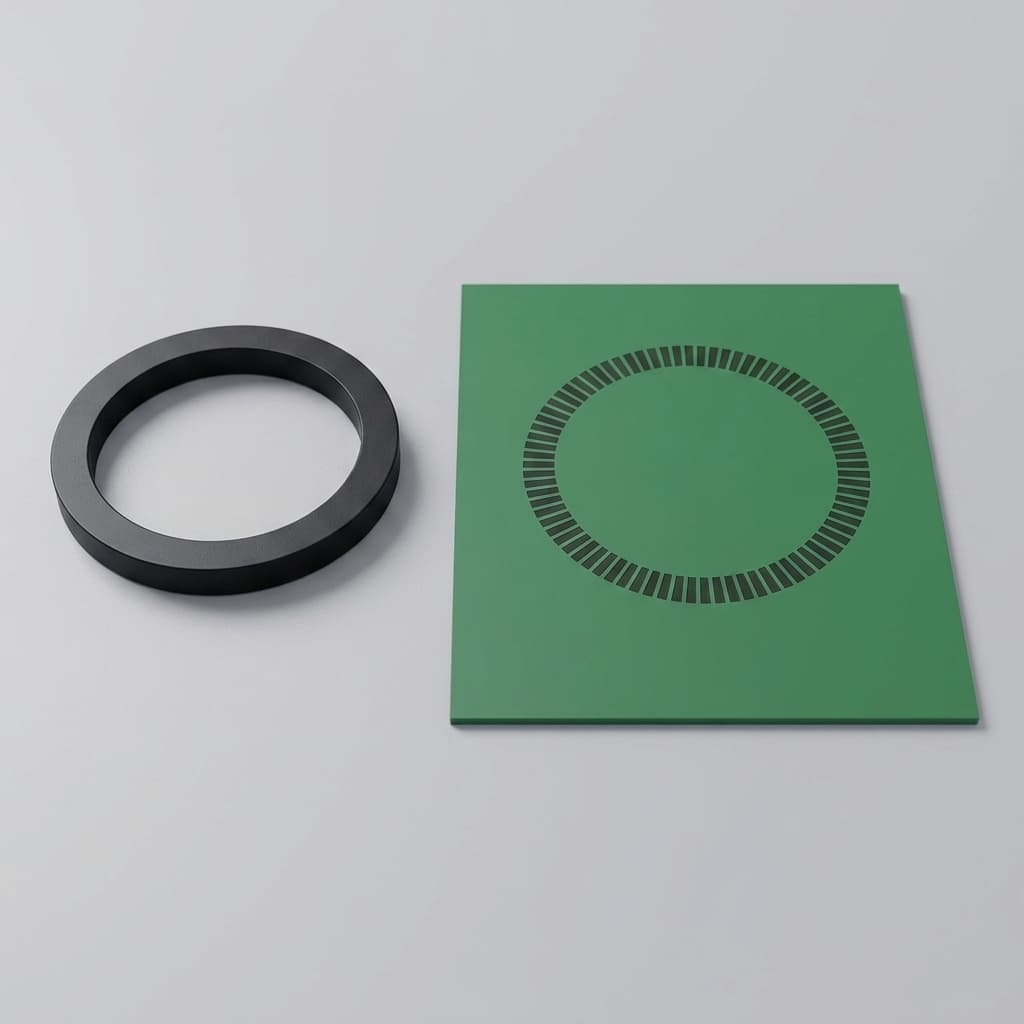
ASIL-D Sensor Magnet Requirements: Engineering & Procurement Guide
ASIL-D sensor magnet guide for ISO 26262 programs: compare materials, thermal drift, stray-field immunity, validation evidence, and RFQ controls.
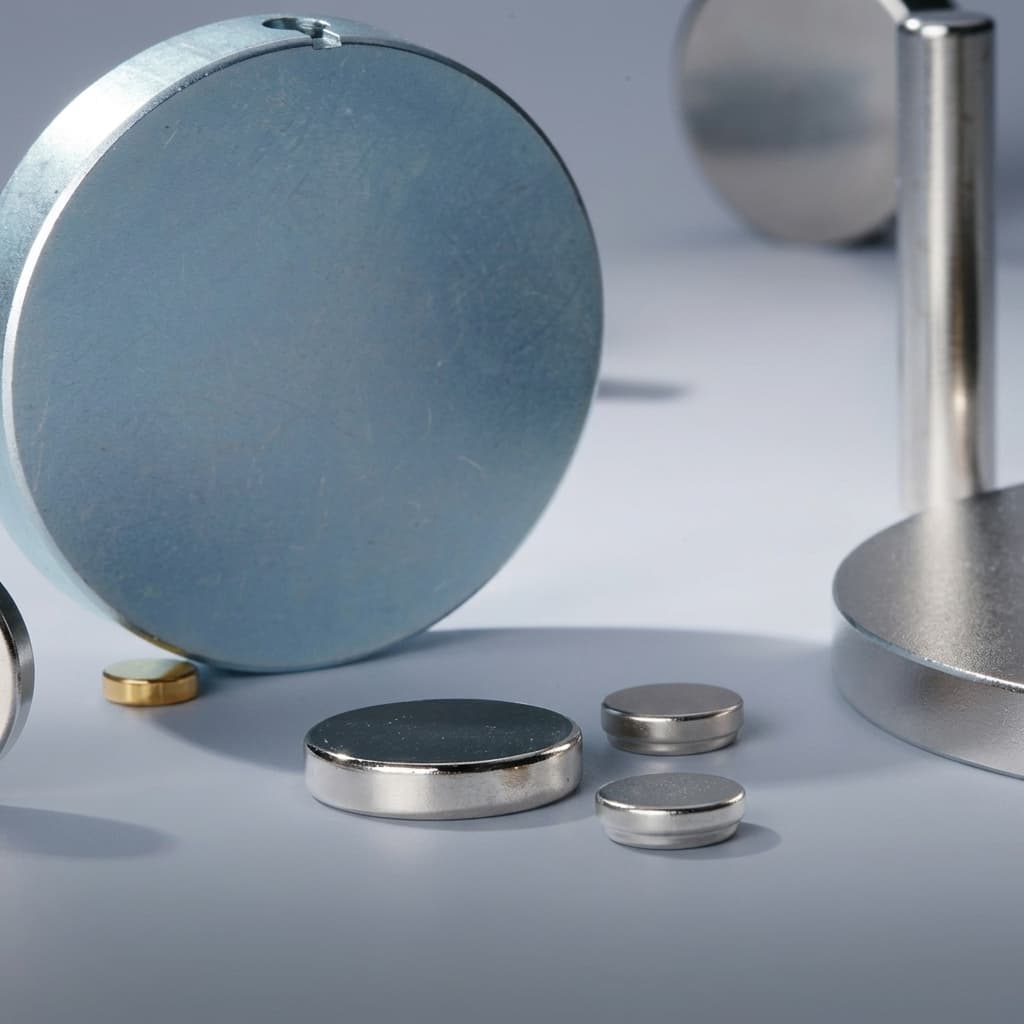
Automotive vs. Industrial Sensor Magnets: PPAP, Traceability, and Cost Drivers
A procurement and engineering guide to understanding the price delta between automotive-grade and industrial sensor magnets. Learn about PPAP, IATF 16949 traceability, and Zero Defect policies.
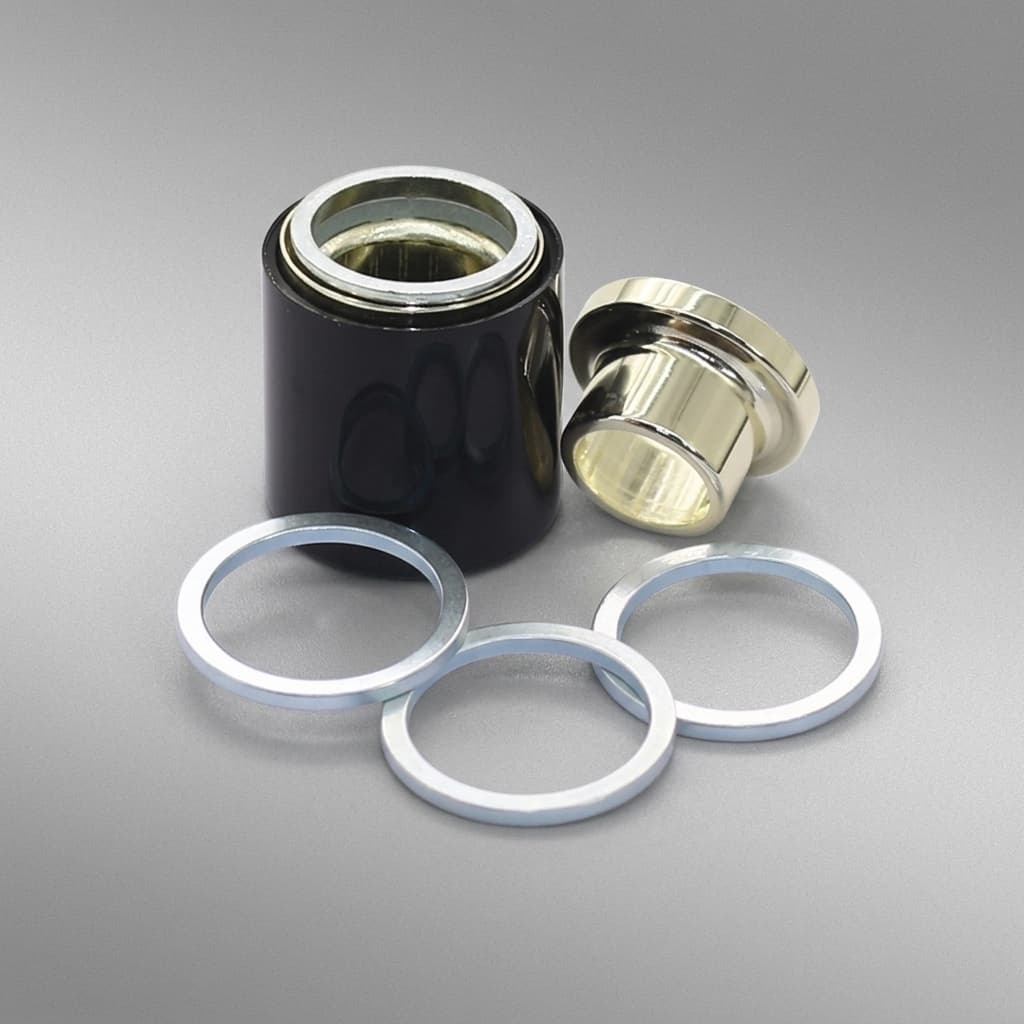
Specifying Magnets for Stray-Field Immune Position Sensors (2-Pole vs 4-Pole)
An engineering guide to selecting magnets for ISO 11452-8 compliant stray-field immune position sensors. Learn why upgrading your sensor IC often requires switching from a 2-pole to a 4-pole magnet.