
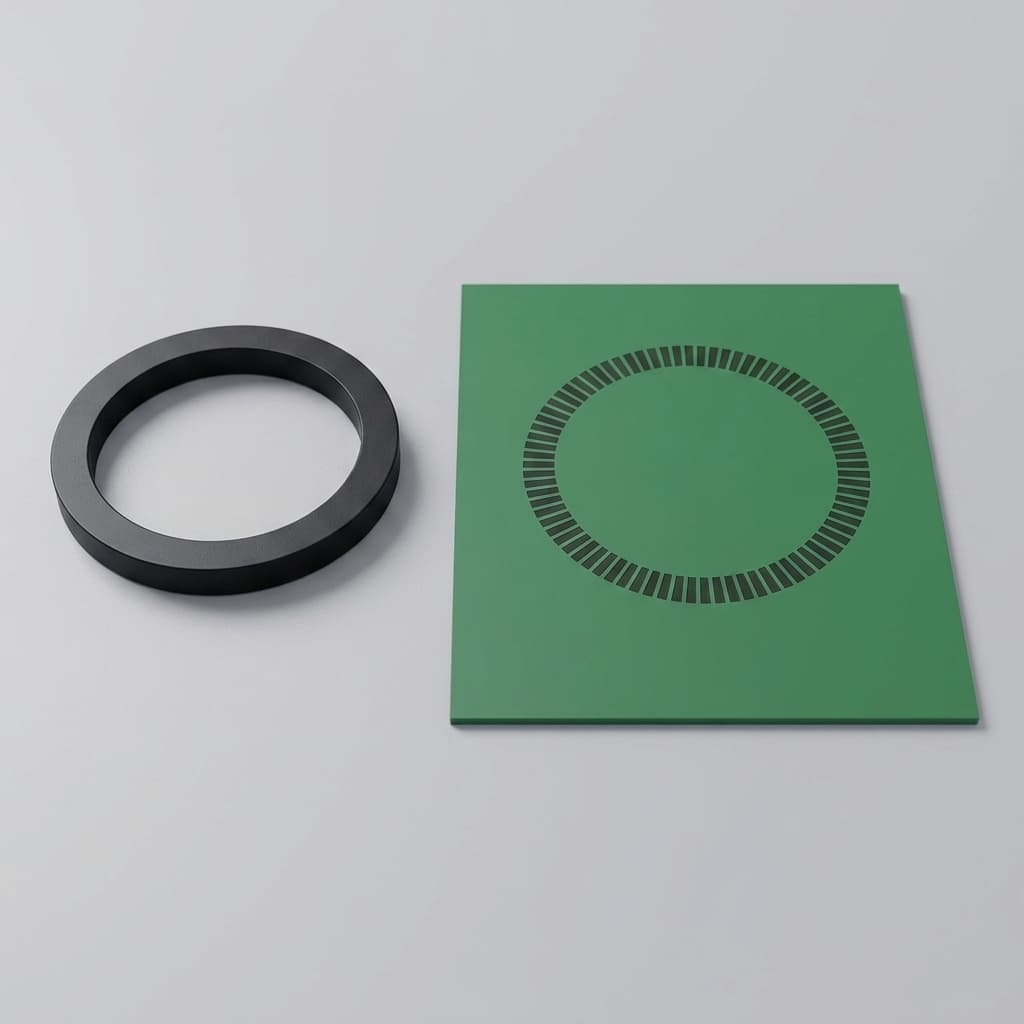
Sensor Magnet RFQ Checklist for OEM Buyers
A detailed RFQ checklist for custom sensor magnets, covering application data, magnetization, coating, tolerance, samples, inspection, packaging, and quote comparison.
Decision brief
Who this is for
OEM buyers, application engineers, and supplier quality teams preparing a sensor magnet RFQ.
What you can decide
- What information must be defined before asking a supplier to quote.
- How to compare supplier replies beyond unit price and grade.
- What data should be frozen before approving samples for repeat production.
Evidence included
- RFQ information flow diagram.
- Quote comparison scorecard.
- Supplier response worksheet.
- Sample approval data pack checklist.
Practical boundaries
- The guide does not replace buyer-side validation or controlled drawings.
- Final acceptance should be based on the real sensor, air gap, environment, and assembly method.
I receive about 40 sensor magnet RFQs per month. Roughly 70 % arrive as some version of "Need N52 magnet for Hall sensor, please quote." That is enough to start a conversation, but not enough to quote responsibly, build stable samples, or compare suppliers.
The RFQs that move fastest are the ones that tell me what the sensor needs, not just what the magnet looks like. When I get a well-structured request — sensor type, air gap, trigger condition, environment, and volume — I can usually return a recommendation with pricing within 24 hours. When I get only a size and grade, the quote takes 3–5 rounds of back-and-forth emails, and the first sample still has a 30 % chance of needing revision because we guessed at something the buyer assumed was obvious.
This checklist is the structure I wish every buyer would use. It is organized around the four questions that matter most at quote stage — and it includes the exact scoring method I recommend for comparing supplier responses.
This checklist is written for buyers sourcing Hall effect sensor magnets, multipole ring magnets, axially magnetized magnets for sensor gaps, 1 16 diametric magnet sizing guide, reed switch magnets, magnetic floats, and custom magnetic assemblies.
Decision Output
After using this guide, your RFQ should answer four questions before a supplier quotes:
| Decision Area | What the supplier should know | Why it matters |
|---|---|---|
| Sensing function | Hall, reed, AMR, GMR, encoder, speed pickup, level sensing, or position detection | The sensor type changes field direction, strength, pole count, and tolerance priorities |
| Magnetic target | Field strength, polarity, pole pattern, air gap, trigger window, or reference sample | Prevents a supplier from quoting only by material grade and size |
| Environment | Temperature, humidity, liquid exposure, vibration, salt spray, outdoor use, or chemical contact | Drives material and coating choice |
| Production plan | Prototype quantity, annual volume, packaging, inspection level, and delivery location | Determines tooling, sample path, packing, and lead-time assumptions |
RFQ Information Flow
The best RFQ starts with the application and ends with measurable acceptance criteria. If a supplier quotes before understanding the sensing window, the price may look fast but the sample risk moves to your engineering team.
1. Application Data: Start With the Sensor, Not the Magnet
Buyers often start with magnet grade and dimensions because those are easy to send. For sensor magnets, the application context is more important.
Include these fields in the first RFQ:
| Field | Recommended Detail | Supplier Use |
|---|---|---|
| Sensor type | Hall latch, Hall switch, linear Hall, reed switch, AMR/GMR/TMR, encoder IC, speed pickup, float level sensor | Determines required field orientation and switching margin |
| Sensing motion | Linear travel, rotation, proximity approach, float movement, end-position detection, speed pulse | Determines pole pattern and magnet placement |
| Working air gap | Nominal air gap plus minimum and maximum stack-up | Helps evaluate if field strength is realistic |
| Trigger point | Switch-on distance, switch-off distance, angle, RPM pulse count, or voltage target | Converts magnet design into measurable performance |
| Sensor package | IC model, reed capsule size, PCB position, or reference module if available | Prevents wrong field direction relative to the sensitive axis |
| Reference part | Existing magnet sample, old drawing, field map, or failed sample | Speeds up matching and root-cause review |
If you cannot share the sensor model, share the sensitive axis and target switching condition. A supplier can work without the exact IC only if the magnetic target is measurable.
2. Magnet Drawing Data: Define the Functional Surfaces
For simple block or cylinder magnets, a 2D drawing may look enough. For sensor use, the drawing should also identify functional faces, datum references, and pole direction.
Minimum drawing notes:
| Drawing Note | Why Buyers Should Include It |
|---|---|
| Magnetization direction | Axial, diametric, radial, multipole, through-thickness, or custom orientation |
| North pole reference | Marked face, marked edge, orientation arrow, or assembly datum |
| Critical dimensions | Dimensions that affect air gap, fit, and sensor trigger point |
| Non-critical dimensions | Dimensions where looser tolerance is acceptable to reduce cost |
| Chamfer or radius | Helps reduce chipping and improves assembly handling |
| Surface finish or burr requirement | Important for overmolding, bonding, or press-fit carriers |
| Marking requirement | Dot, line, laser mark, color mark, or packaging orientation |
Do not let every dimension become critical by default. If all tolerances are tight, the supplier may quote unnecessary grinding, sorting, or inspection time. Identify which surfaces control the sensor gap and which surfaces are only for handling or clearance.
3. Magnetic Performance: Specify What Can Be Measured
Grade alone is not a performance specification. "N35", "N42", and "N52" describe material energy level, but the sensor sees field strength and direction at a location.
Use one of these performance targets:
| Target Type | Good RFQ Example | When to Use |
|---|---|---|
| Surface field | "Surface field at marked face: 180 to 230 mT, measured with flat probe at center" | Simple axial magnets and incoming checks |
| Air-gap field | "Bz at 2.5 mm from marked face: minimum 42 mT" | Hall switch, latch, and position sensing |
| Pole count | "24 poles around OD, alternating N/S, index mark at datum slot" | Multipole ring magnets and encoder applications |
| Field direction | "Radial component must face sensor sensitive axis at assembled position" | Side-mounted Hall sensors or angle sensors |
| Reference matching | "Match supplied sample within agreed switching distance window" | Legacy replacement and reverse engineering |
When possible, specify the measurement method. The same magnet can read differently depending on probe type, probe distance, fixture centering, and whether the reading is surface field or air-gap field.
4. Material and Coating: Tie the Choice to the Environment
The material decision should follow the environment and sensing margin.
| Environment | Common Risk | Practical Starting Point |
|---|---|---|
| Indoor dry equipment | Chipping, handling damage, wrong polarity | NdFeB with NiCuNi or epoxy, depending on assembly process |
| High humidity | Coating corrosion and edge exposure | Epoxy, NiCuNi plus sealing review, or assembly-level protection |
| Liquid level sensing | Long-term corrosion, swelling of carrier, float leakage | Coating plus carrier compatibility review; do not rely on magnet coating alone |
| High temperature | Loss of field, irreversible demagnetization | Higher intrinsic coercivity NdFeB or SmCo depending on temperature |
| Outdoor or automotive-adjacent use | Corrosion, vibration, thermal cycling | Coating validation, retention design, and packaging protection |
If you do not know the exact coating, send the working environment and ask the supplier to recommend options. A lower-cost coating that fails after humidity testing is more expensive than choosing the correct protection early.
5. Prototype and Mass Production Should Not Use Different Logic
One common RFQ mistake is to request samples quickly and discuss production controls later. This creates a sample that works once but is difficult to repeat.
Use the same acceptance logic for both stages:
| Stage | Buyer Should Define | Supplier Should Confirm |
|---|---|---|
| Engineering sample | Quantity, target field, inspection report, marking method, packaging | Whether sample process matches production intent |
| Validation sample | Lot size, drawing revision, measurement fixture, tolerance range | Whether variation data can be provided |
| Pilot run | Lot traceability, packaging format, incoming inspection plan | Whether process capacity is stable enough |
| Mass production | Annual volume, shipment schedule, labeling, change-control process | Lead time, capacity, and repeat-order controls |
If you expect yearly repeat orders, state the annual demand range even if the first order is small. It affects tooling, magnetization fixtures, inspection planning, and inventory discussion.
6. RFQ Field Checklist
Use this table as the core RFQ checklist. The "must-have" fields are the minimum needed for a responsible first quote.
| RFQ Field | Must-Have? | Notes for Buyers |
|---|---|---|
| Application and sensor type | Yes | Include sensor family and motion path |
| Drawing or dimensions | Yes | Add pole direction and critical datum |
| Material preference | Yes | If unknown, describe environment instead |
| Coating preference | Yes | If unknown, describe humidity, liquid, or chemical exposure |
| Magnetization type | Yes | Axial, diametric, radial, multipole, or custom |
| Magnetic target | Strongly recommended | Field at point, pole count, or switching distance |
| Working temperature | Yes | Include short-term and continuous exposure if different |
| Quantity | Yes | Prototype, pilot, annual forecast |
| Assembly condition | Strongly recommended | Bonded, press-fit, overmolded, inserted, or loose magnet |
| Packaging requirement | Recommended | Orientation, trays, bags, labels, anti-collision needs |
| Inspection requirement | Recommended | Dimensions, polarity, field, coating, visual defects |
| Target delivery location | Yes | Country, city, or forwarder location |
7. Weak RFQ vs Strong RFQ
| Weak RFQ | Strong RFQ |
|---|---|
| "Need N52 magnet, 6 x 3 mm, quote 10k pcs." | "Need 6 x 3 mm cylinder magnet for Hall switch, axial magnetization, marked north face toward sensor, 2.2 to 3.0 mm air gap, 85 deg C continuous, indoor equipment, first sample 50 pcs, annual 30k pcs." |
| "For encoder ring, please quote." | "Need 32-pole ring magnet for rotary encoder, OD/ID/height drawing attached, pole pitch uniformity important, index orientation marked at datum notch, sample field map requested." |
| "Magnet for water level sensor." | "Need magnet for float level sensor, liquid exposure inside sealed float, max 70 deg C, corrosion resistance important, magnet must not rattle in carrier, quote coating and carrier assembly options." |
The strong version does not need to be perfect. It simply removes the largest assumptions.
8. Cost Drivers Buyers Should Separate
If you only ask for the lowest unit price, suppliers may remove important controls from the quote. Separate the cost drivers so you can decide which ones are required and which ones are optional.
| Cost Driver | What Usually Raises Cost | Typical Impact on Unit Price | When It Is Worth Paying For |
|---|---|---|---|
| Tight tolerance | Grinding, sorting, higher inspection time | +15–30 % | When the dimension controls air gap, press fit, or sensor trigger position |
| High grade (N35 → N52) | Higher material cost, lower temperature margin | +20–40 % | When field target cannot be reached by geometry or air-gap improvement |
| Special magnetization | Custom fixture, multipole mapping, orientation control | +10–25 % (plus fixture cost) | When sensor output depends on pole location or pulse count |
| Coating upgrade (NiCuNi → epoxy + Ni) | Extra process steps and longer lead time | +5–15 % | When humidity, liquid, adhesive, or salt exposure can damage the magnet |
| Marking and oriented packing | Added handling and inspection labor | +3–8 % | When assembly operators must maintain pole direction |
| Magnetic report per lot | Fixture setup and measurement labor | +2–5 % at low volumes | When field target is critical to product release |
| Custom assembly (carrier + adhesive) | Carrier, adhesive, overmolding, retention checks | +40–120 % | When loose magnet handling creates assembly risk or field issues |
Where does the money actually go? Here is a rough cost breakdown for a typical Ø6 × 3 mm N42 sensor magnet ordered in a 10,000-piece lot:
| Cost Component | Approximate Share | Notes |
|---|---|---|
| Raw NdFeB material | 35–45 % | Fluctuates with rare earth commodity prices |
| Machining / sintering | 20–25 % | Includes slicing, grinding, and chamfering |
| Coating (NiCuNi) | 8–12 % | Epoxy coating costs slightly more |
| Magnetization | 5–8 % | Standard axial fixture; multipole costs more |
| QC and marking | 3–5 % | Polarity marking, dimension check, visual inspection |
| Packaging and shipping | 5–10 % | Oriented tray packing costs more than bulk bags |
| Overhead and margin | 10–15 % | Factory operating costs |
This breakdown helps procurement understand why "just make it cheaper" usually means cutting coating, inspection, or packaging — the exact controls that prevent field failures. A smarter negotiation targets geometry simplification, tolerance relaxation on non-critical surfaces, or volume consolidation.
9. Lead-Time Questions That Prevent Hidden Delays
Lead time for sensor magnets is not only production time. It can include drawing review, tooling, magnetization fixture confirmation, coating, sample report preparation, and export packing.
| Question | Why It Matters |
|---|---|
| Is the magnetization fixture existing or new? | New fixtures can add time and require sample confirmation |
| Is coating outsourced or in-house? | Outsourced coating can add scheduling and inspection steps |
| Can sample inspection use the same method as production? | Prevents a sample report that cannot be repeated later |
| Is material in stock for the first sample? | Prototype lead time may differ from mass-production lead time |
| Will packaging be final for the sample lot? | Early packaging problems can damage magnets before validation |
| What drawing revision will appear on the label? | Avoids confusion when engineering updates happen during sampling |
10. Quote Comparison Scorecard
When several suppliers quote, compare more than unit price. A low price with unclear assumptions can become expensive after sample failure.
| Score Area | Weight | What to Check |
|---|---|---|
| Understanding of sensing function | 25% | Did the supplier address sensor type, air gap, and magnetic target? |
| Drawing and magnetization clarity | 20% | Did they confirm pole direction, marking, and critical dimensions? |
| Material and coating rationale | 20% | Did they connect material and coating to temperature and environment? |
| Sample and inspection plan | 20% | Did they offer measurable sample acceptance criteria? |
| Commercial fit | 15% | Are MOQ, lead time, packaging, and delivery assumptions clear? |
If a supplier only replies with price, grade, and lead time, ask for the missing assumptions before comparing.
11. RFQ Email Template
Use this as a first message and attach drawings or photos when available.
Subject: Sensor Magnet RFQ - [Application / Project Name]

Hello MagnetsForSensors team,

We are evaluating a custom sensor magnet for the following application:

Application:
- Sensor type:
- Motion or sensing function:
- Nominal air gap:
- Target trigger point or magnetic field:

Magnet requirement:
- Shape and dimensions:
- Magnetization direction or pole pattern:
- Material / grade target:
- Coating or environment:
- Working temperature:
- Critical tolerance or datum:

Program requirement:
- Prototype quantity:
- Annual forecast:
- Required documents:
- Delivery location:

Please review feasibility, recommended material/coating, sample plan, lead time, and quotation.
12. What to Send If You Have No Drawing Yet
If the project is early, send a sketch or photo with:
- approximate space envelope;
- sensor position and sensitive axis;
- motion direction;
- expected distance between magnet and sensor;
- material or temperature limits;
- quantity forecast;
- old sample or target switching behavior.
This is enough for a feasibility discussion. The final production quote will still need a drawing and agreed measurement method.
13. Internal Handoff Checklist for Buyers
Before sending the RFQ externally, align these items internally. This reduces late-stage changes after supplier sampling starts.
| Internal Owner | Should Confirm | Typical Evidence |
|---|---|---|
| Electrical engineering | Sensor sensitive axis, trigger threshold, air-gap target | IC datasheet note, schematic mark, test fixture target |
| Mechanical engineering | Magnet envelope, datum, carrier fit, tolerance priority | Drawing, 3D screenshot, tolerance stack note |
| Quality | Incoming inspection level and critical characteristics | Inspection plan, control list, acceptance criteria |
| Procurement | Quantity forecast, delivery location, packaging expectation | RFQ sheet, forecast range, shipping terms |
| Manufacturing | Assembly orientation, marking need, operator handling risk | Work instruction draft, assembly sketch |
If these owners disagree, resolve that before asking for final quote. Otherwise, suppliers will quote against a moving target.
14. Worked Example: Hall Switch Magnet for an OEM Module
Here is a practical example of how a vague inquiry becomes a production-ready RFQ.
| RFQ Area | Weak Input | Better Input |
|---|---|---|
| Application | Magnet for Hall sensor | Magnet triggers a Hall latch in a compact equipment module |
| Geometry | 6 mm cylinder | Diameter 6.0 mm, height 3.0 mm, height controls air gap |
| Magnetization | Strong magnet | Axial magnetization, north face toward sensor, marked north face |
| Air gap | Close to sensor | Nominal 2.4 mm, minimum 2.0 mm, maximum 3.1 mm after tolerance stack |
| Magnetic target | N52 preferred | Bz at 2.5 mm from north face should exceed the sensor release margin |
| Environment | Normal use | Indoor equipment, 85 deg C continuous, no liquid exposure |
| Assembly | Inserted by operator | Oriented tray packing required; marked face must be visible before insertion |
| Approval lot | Need samples | 50 engineering samples with dimension, polarity, and air-gap field report |
This type of RFQ gives the supplier room to recommend grade and coating while keeping the functional requirement clear. It also makes supplier replies easier to compare because every quote must address the same sensing condition.
15. Red Flags in Supplier Replies
Use these red flags to decide whether you should ask for clarification before accepting a quote.
| Supplier Reply | Why It Is Risky | Follow-Up Question |
|---|---|---|
| "We can make N52, price is..." | Grade is quoted without confirming field target or temperature margin | Which grade do you recommend for the air-gap field and working temperature? |
| "Surface field is OK" | Measurement point is undefined | What probe, distance, and location will be used for the report? |
| "Polarity can be marked" | Marking method and packing orientation are not defined | Is the marked pole inspected and packed in the same orientation? |
| "Standard coating is fine" | Environment and assembly process may not match standard coating | Which coating is recommended for humidity, adhesive, or liquid exposure? |
| "Sample lead time is short" | Sample may use a temporary route that differs from production | Will sample process, magnetization fixture, and coating route match mass production? |
The goal is not to make the RFQ complicated. The goal is to remove assumptions before they become a failed sample or a delayed repeat order.
16. RFQ Attachment Pack by Project Stage
The right attachment pack depends on how mature the project is. A first feasibility inquiry does not need the same documents as a repeat production quote, but each stage should still give the supplier enough information to avoid guessing.
| Project Stage | Minimum Attachment Pack | Useful Extra Evidence | Buyer Decision It Supports |
|---|---|---|---|
| Early concept | Sketch, sensor location, estimated air gap, target motion | Photo of available space, reference product, switch target | Feasibility, likely magnetization, rough cost range |
| Prototype RFQ | 2D drawing, material or environment note, quantity, target field or trigger point | Sensor datasheet excerpt, old sample, CAD screenshot | Sample route, grade/coating recommendation, lead time |
| Validation sample | Controlled drawing revision, inspection items, packaging need | Test fixture photo, field map target, approval report format | Whether the sample can become a repeatable production part |
| Pilot production | Forecast range, label requirement, lot traceability need | Incoming inspection checklist, assembly work instruction | Whether supplier controls match your production process |
| Repeat production | Current drawing, approved sample baseline, shipment schedule | Historical failure notes, trend limits, change-control requirement | Stable supply, controlled changes, fewer receiving surprises |
If you have only one email thread, keep the latest drawing, measurement target, and packaging requirement in the same message. Many sample problems come from old attachments being reused after engineering changes.
17. Quote Assumption Register
For custom sensor magnets, a quote should make assumptions visible. Ask the supplier to confirm or correct these items before you compare prices.
| Assumption to Record | Example Entry | Why It Matters Later |
|---|---|---|
| Material route | NdFeB N35SH recommended instead of N52 due to temperature margin | Prevents grade-only purchasing from overriding engineering margin |
| Magnetization fixture | Existing axial fixture; new fixture required for 24-pole ring | Separates normal production lead time from tooling lead time |
| Coating route | Epoxy recommended because of humidity and edge exposure | Keeps coating choice tied to environment, not only unit price |
| Measurement method | Bz at 2.5 mm using fixture-centered flat probe | Makes supplier report and buyer incoming check comparable |
| Packing method | Marked north face up in tray, separators between layers | Reduces assembly orientation mistakes and shipping damage |
| Sample route | Engineering sample uses same magnetization route as production | Avoids approving a sample that cannot be repeated |
| Change notification | Grade, coating, magnetizing fixture, and packing changes require approval | Protects repeat orders after the first lot is accepted |
This register is especially useful when one supplier quotes faster than the others. A fast quote with hidden assumptions should not be treated as lower risk.
RFQ Completeness Map
Use this visual check before sending the request. If the RFQ is missing the right side of the map, the supplier may still quote, but the quote will contain more hidden risk.
18. Buyer-Side RFQ Review Meeting Agenda
For higher-value programs, hold a short internal review before sending the RFQ. The meeting does not need to be formal; it should simply prevent procurement from sending a magnet request that engineering and quality cannot approve later.
| Agenda Item | Owner | Output to Add to RFQ |
|---|---|---|
| Sensor behavior | Electrical engineering | Sensor type, sensitive axis, trigger condition, field margin concern |
| Mechanical stack | Mechanical engineering | Air gap range, critical datum, assembly envelope, tolerance priority |
| Magnet risk | Supplier quality or engineering | Magnetization type, coating risk, measurement method, inspection level |
| Production handling | Manufacturing | Orientation control, marking, tray packing, operator mistake risks |
| Commercial plan | Procurement | Sample quantity, forecast range, target delivery location, required timing |
This agenda is a simple way to make the RFQ more valuable than a price request. It also gives the supplier a clear reason to respond with engineering feedback instead of only quoting grade and unit price.
19. Supplier Response Worksheet
After suppliers reply, copy their answers into one worksheet before choosing a sample source. This avoids comparing a detailed engineering quote against a bare price quote.
| Review Line | Supplier A | Supplier B | Buyer Decision |
|---|---|---|---|
| Recommended material and grade | Accept, challenge, or ask for rationale | ||
| Magnetization method and datum | Must match drawing and assembly instruction | ||
| Coating recommendation | Must match humidity, liquid, adhesive, or temperature exposure | ||
| Magnetic acceptance method | Must include point, distance, probe direction, and fixture note | ||
| Sample route | Should match intended production route where practical | ||
| Inspection evidence | Define dimension, polarity, field, visual, and packaging records | ||
| Packing and orientation | Confirm tray, separator, label, pole direction, and transport protection | ||
| Lead-time assumption | Separate material, fixture, coating, report, and export packing time | ||
| Change-control promise | Record which changes require buyer approval |
This worksheet is deliberately plain. It forces the purchasing decision to include magnetization, coating, measurement, and packaging controls instead of only price and lead time.
20. Minimum Data Pack to Freeze Before Sample Approval
Before approving samples, the buyer and supplier should freeze a small baseline package. Without this baseline, repeat orders can drift even when the first sample worked.
| Baseline Item | Freeze Before Sample Approval? | Evidence to Keep |
|---|---|---|
| Drawing revision and part number | Yes | Released PDF or controlled drawing snapshot |
| Material and coating route | Yes | Supplier recommendation and buyer acceptance note |
| Magnetization direction or pole pattern | Yes | Drawing note, pole map, or marked sample photo |
| Magnetic measurement method | Yes | Fixture sketch, distance, probe direction, and target value |
| Polarity or datum marking | Yes | Photo of approved marking and packing orientation |
| Packaging method | Yes for oriented or fragile parts | Tray/bag/separator photo and label example |
| Inspection report format | Recommended | Sample report template with required fields |
| Approved sample retention | Recommended | Retained sample lot number and storage note |
If a future lot changes one of these baseline items, treat it as an engineering review item rather than a routine purchasing detail.
FAQ
Should an RFQ specify magnet grade or magnetic field first?
Specify the functional magnetic field first whenever possible. Grade is useful, but a sensor responds to field strength and direction at its own location. A supplier can often meet the same field target with a different grade, geometry, or magnetization approach.
What if the sensor IC model cannot be shared?
Share the sensitive axis, trigger condition, air gap, and motion path. That is usually enough for an engineering review. If even those details are confidential, send a target switching distance or a reference sample for matching.
Is a 3D model enough for quoting?
A 3D model helps with geometry, but it usually does not define magnetization direction, polarity marking, coating, magnetic acceptance, or inspection method. Send a simple drawing note even when the geometry comes from a 3D file.
When should buyers ask for a magnetic report?
Ask for a report when the magnet controls switching margin, pulse count, calibration, or safety-adjacent feedback. For non-critical prototypes, a polarity and dimension check may be enough; for repeat OEM supply, a defined field check is usually worth the cost.
Practical Next Step
If you want a quote that can move from sample to repeat production, send the checklist items above to [email protected] or WhatsApp +86 18857971991.
For related product pages, start with Hall effect sensor magnets, multipole ring magnets, or custom magnetic assemblies.
Reviewed by

Categories
More Posts
Section 301 Tariff on Sensor Magnets: Why Magnetic Assemblies Reduce Your Landed Cost
How 2026 US tariff changes affect sensor magnet sourcing, why magnetic assemblies face lower duty rates than bare magnets, and what procurement teams should evaluate before the next PO.
Sensor Magnet Material Selection: NdFeB, SmCo, AlNiCo, and Ferrite Compared
A side-by-side engineering comparison of the four permanent magnet material families used in sensor applications, covering magnetic properties, temperature limits, corrosion behavior, and cost trade-offs.
TMR vs Hall Effect Sensor Magnets: Target Specification Guide
Compare TMR vs Hall Effect sensor magnets for RFQ specs, field limits, materials, tolerances, and sourcing risk. Use the checklist to source target magnets.